

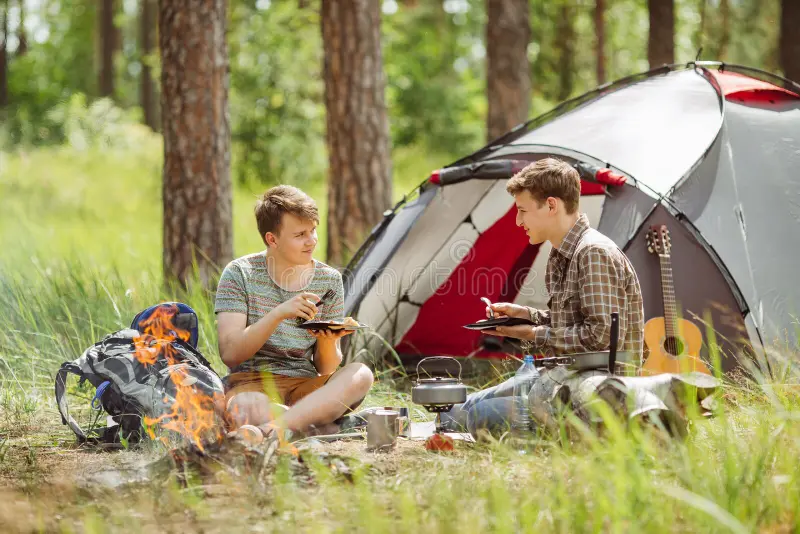
Introduction: The Silence That Speaks Volumes
There is a distinct kind of stillness that descends once the sun dips behind the trees and the campfire crackles into life. In that moment, removed from deadlines, screens, and city sounds, something shifts. We listen more closely, breathe more deeply, and see more clearly. Camping, at its most fundamental, is not simply about sleeping outdoors—it’s a return to rhythm. It offers a quiet rebellion against the hurried pace of modern life and restores the sense of wonder many of us unknowingly crave.
Camping is ancient, elemental, and deeply human. It reconnects us to a part of ourselves that longs for unstructured time and open sky. This article takes a thoughtful look at camping—not just as an activity, but as a form of living, an experience that nourishes the soul, and a time-honored way to deepen our relationship with the natural world.
The Essence of Camping: More Than an Outdoor Hobby
To camp is to deliberately choose the unrefined over the polished, the wild over the orderly. Whether one is hiking to a remote backcountry site or pitching a tent in a family-friendly campground, the underlying principle is the same: to engage directly with nature and simplicity.
Why Camping Matters in Today’s World:
-
It grounds us. Camping offers an antidote to overstimulation. It reminds us of nature’s pace—unhurried, unforced, and grounded.
-
It cultivates resilience. Small discomforts—cool nights, uneven ground, or the hum of unfamiliar insects—build tolerance, patience, and adaptability.
-
It rekindles connection. Time outdoors naturally fosters deeper conversations, shared experiences, and bonding that outlasts the trip itself.
Camping strips away the superfluous. It sharpens the senses and softens the spirit, reminding us of what truly matters.
A Diversity of Styles: Finding Your Way to Camp
One of camping’s greatest strengths lies in its flexibility. There is no single right way to do it. From rustic isolation to luxurious glamping, the camping spectrum has something for everyone.
Types of Camping Experiences:
-
Tent Camping: The classic approach, ideal for those who value immersion in nature. It requires minimal gear and offers maximum intimacy with the environment.
-
Car Camping: Ideal for beginners or families, car camping offers convenience without sacrificing the outdoor experience. With easy access to amenities, it allows for flexibility and comfort.
-
Backpacking: For those seeking solitude and adventure, backpacking entails carrying all essentials on foot and camping in remote, often untouched locations. It rewards effort with breathtaking scenery and serenity.
-
Glamping (Glamorous Camping): A more recent innovation, glamping blends luxury and wilderness—think canvas tents with real beds, gourmet meals, and en-suite bathrooms.
-
RV and Campervan Camping: Mobile, comfortable, and self-contained, RVs are perfect for extended road trips and those who prefer a structured camping experience.
Regardless of the method, each type of camping offers its own blend of simplicity and adventure.
The Soulful Pleasures of Camp Life
The beauty of camping lies not in grand gestures, but in the quiet joys that unfold throughout the day. These moments, often overlooked in everyday life, become vivid in the wilderness.
Timeless Joys That Enrich the Camping Experience:
-
Morning coffee by the fire, with the scent of pine in the air and the first light filtering through the trees
-
Unstructured time, free from schedules and to-do lists, allowing space for thought, creativity, or simple rest
-
Cooking outdoors, where even the most modest meal tastes better under an open sky
-
Star-gazing, wrapped in a blanket, humbled by the sheer immensity of the cosmos
-
Walking without a destination, simply listening to the birdsong and letting the path unfold
Camping slows the clock. It heightens awareness and draws attention to details that daily life often rushes past.
Planning with Purpose: What Makes a Great Camping Experience
While spontaneity adds charm, thoughtful preparation ensures the trip is safe and enjoyable. Preparation allows freedom—not from mishaps entirely, but from unnecessary worry.
Key Elements of a Successful Camping Trip:
-
Choose your destination wisely. Consider your skill level, the season, and the kind of experience you’re seeking—solitude, social interaction, or something in between.
-
Pack thoughtfully. Essentials include shelter, bedding, weather-appropriate clothing, cooking supplies, lighting, and a basic first-aid kit.
-
Respect the land. Follow Leave No Trace principles—pack out what you bring in, minimize campfire impact, and respect wildlife and other campers.
-
Embrace simplicity. The goal isn’t to recreate home, but to discover comfort in the essentials.
-
Remain flexible. Weather shifts, gear malfunctions, or unexpected detours often become the most memorable parts of a trip.
Preparation creates the structure within which adventure can flourish.
The Social and Personal Value of Camping
Whether shared or solitary, camping can be a transformative experience. In families, it strengthens bonds through teamwork and shared discovery. Among friends, it forges deep memories around firelight and trail. For solo travelers, it becomes a meditative act—time alone with one’s thoughts, stripped of performance or pretense.
The Lasting Impact of Camping:
-
Renewed appreciation for nature and its intricate beauty
-
A deeper sense of self, cultivated in quiet moments
-
Heightened gratitude, for both the wilderness and the comforts of home
-
Strengthened relationships, built through cooperation, vulnerability, and shared awe
Camping teaches us that connection doesn’t require Wi-Fi, entertainment doesn’t need a screen, and beauty exists everywhere, often in the most unassuming places.
Conclusion: A Sacred Pause in a Noisy World
Camping is not simply a leisure activity—it’s an invitation. An invitation to pause, to unplug, and to dwell in a space where silence isn’t empty, but full. It asks nothing more than your presence and gives back far more than it takes.
In tents pitched beneath stars, meals cooked over flickering flames, and trails followed without urgency, we find clarity. We remember that life, in its purest form, is not always lived in the grand or the busy—but in the quiet spaces, where the world slows and speaks softly.
So pack your bag. Light the fire. And let the wilderness remind you of all you’ve forgotten to notice. Because in the end, camping isn’t about where you go—it’s about how deeply you’re willing to arrive.