

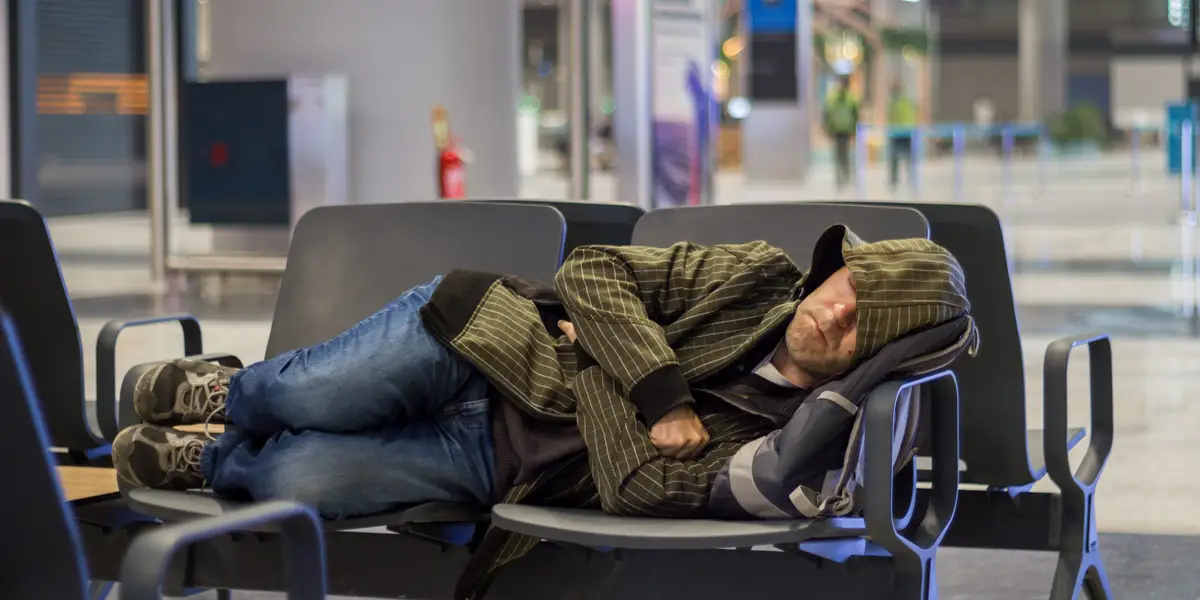
Sleeping in an airport terminal is an exercise in contradictory instincts. Your body is exhausted from transit delays, long layovers, or early-morning departures, yet your brain remains on high alert. The lights never dim, the public address system fires off routine announcements every few minutes, and cleaning crews maneuver heavy floor scrubbers across polished terrazzo. Above all, a persistent fear keeps you awake: the terror of drifting off, missing final boarding, and watching your plane push back from the gate without you.
Pulling off a successful terminal nap requires more than curling up in an uncomfortable chair and hoping for the best. It requires a deliberate, tactical setup that addresses physical security, environmental noise, and wake-up reliability. When you treat airport sleep as a logistical challenge rather than an act of desperation, you can get genuine rest without putting your itinerary at risk.
The Anatomy of Airport Paranoia
The primary barrier to airport sleep is rarely the physical hardness of the floor or the chill of the climate control. It is psychological hyper-vigilance. When you close your eyes in a public transit hub, your brain naturally treats the space as hostile territory. You worry about someone walking away with your carry-on bag, you worry about a gate change happening silently while you doze, and you worry that your phone alarm will fail to pierce through heavy exhaustion.
Because your nervous system stays partially engaged, you end up drifting through a miserable state of half-sleep that leaves you more fatigued than before. To achieve restorative rest, even for just an hour or two, you must systematically eliminate each of those anxieties before you close your eyes. If your belongings are physically secured and your wake-up protocol is foolproof, your mind can finally stand down.
Building a Redundant Wake-Up Protocol
Never rely on a single smartphone alarm to wake you up in an airport. Ambient terminal noise, dead batteries, silent mode overrides, and deep physical exhaustion create a perfect storm for sleeping past your boarding window. You need a system of overlapping fail-safes.
Calculate Around Boarding Time, Never Departure Time
The single biggest operational mistake travelers make is setting their alarm relative to the departure time printed on their ticket. Flights routinely begin boarding forty to fifty minutes before departure, and gate agents often close the aircraft doors ten to fifteen minutes before scheduled pushback.
If you wake up thirty minutes before departure, you have likely already missed your flight. Set your primary wake-up alarm for at least sixty minutes before scheduled departure if you are sleeping at your assigned gate, and at least ninety minutes before departure if you are resting in a different part of the terminal or need to clear security again.
The Multi-Device Alarm Stack
Deploy at least two independent devices to wake you. If your primary phone is on a charger, set an alarm on your secondary device, whether that is a tablet, a laptop, or a wearable fitness tracker.
A wearable device with a vibrating motor strapped directly to your wrist is significantly more reliable than an audible alarm in a noisy terminal. A phone speaker can easily be drowned out by gate announcements or the ambient drone of jet engines outside the glass, but physical vibration against your skin cuts directly through deep sleep.
If you use noise-canceling headphones to fall asleep, double-check your phone settings to ensure that alarm audio routes through both the headphones and the external device speaker. If the headphones run out of battery mid-nap and power down, an alarm configured to play only through Bluetooth could fire silently into disconnected earbuds.
Enlist the Human Element
Technology is resilient, but people are unmistakable. If you are sleeping in the immediate gate area near other travelers waiting for the same flight, make brief, polite contact with a neighbor or a gate agent.
Point to your boarding pass, explain that you are exhausted from an overnight connection, and ask if they would mind giving your shoulder a quick nudge if boarding reaches the final call and you are still out cold. Most people are remarkably sympathetic to the realities of travel fatigue. While you should never rely on a stranger as your primary wake-up method, having a human backup costs nothing and adds an extra layer of peace of mind.
Scouting Strategic Sleep Real Estate
The gate assigned to your flight is rarely the best place to sleep. Gate areas are high-traffic corridors filled with boarding announcements, anxious travelers pacing the aisles, and bright gate podium displays. If you want meaningful rest, you usually need to look slightly off the beaten path.
Look for gates that have no scheduled departures for the next four to five hours. Wide-body international gates during the middle of the morning, or regional commuter concourses late at night, frequently sit empty and dark. You get the benefit of airport security and proximity to restrooms without the constant churning crowds.
Many major hub airports also feature designated quiet zones, reflection rooms, or interfaith chapels. These spaces are typically located on mezzanine levels or tucked away in secondary corridors. While they are intended for contemplation rather than full overnight camping, they enforce strict quiet policies, offer dim lighting, and provide a welcome refuge from the commercial chaos of the main concourse.
Upper levels are another underutilized asset. Terminals with high ceilings often feature mezzanines housing airline lounges or administrative offices. The bench seating outside these private spaces frequently experiences a fraction of the foot traffic found on the main floor.
Neutralizing Hostile Architecture
Modern airport terminals are deliberately designed to discourage sleep. Rows of metal and plastic chairs are divided by fixed, unyielding armrests specifically engineered to prevent passengers from lying flat. Overcoming this requires adaptation.
If you must sleep sitting up in a standard terminal seat, do not lean your head back against the rigid seat frame. Instead, pull your carry-on luggage directly in front of you to serve as a footrest. Elevating your feet takes pressure off your lower back and prevents the familiar, painful slide down the chair as your muscles relax. Use a structured neck pillow or a rolled-up heavy jacket to stabilize your head so it cannot slump forward and trigger sudden wakefulness.
When the floor is the only viable option for lying flat, prioritize insulation from the cold surface. Airport floors, whether tile, terrazzo, or thin commercial carpet over concrete, pull heat away from your body rapidly. Lay down a clean winter coat, a packable travel blanket, or even a flattened canvas tote bag to create a thermal barrier between your torso and the floor. Choose a spot wedged against a structural pillar or a solid wall rather than an open thoroughfare to protect yourself from cleaning machinery and rolling luggage carts.
Passive Security: Locking Down Your Bags
You cannot sleep deeply if your subconscious is monitoring your luggage. The secret to sleeping safely in public spaces is creating physical connections between yourself and your gear that make silent theft impossible.
Never leave a bag sitting freely on the floor beside your chair. Before drifting off, loop the strap of your backpack or carry-on around your leg, wrist, or chair frame. If you are lying down, use your primary backpack as a pillow. Placing your head directly on your bag provides an ergonomic lift while ensuring that anyone attempting to move it will immediately wake you.
For wheeled carry-on bags, turn the zipper side facing directly against a wall, a pillar, or your body. Fasten the pull tabs together using a small carabiner or an integrated luggage lock to prevent casual unzipping.
Keep your most sensitive items completely off the floor. Your passport, primary credit cards, boarding pass, and phone should reside in a zippered pocket inside your clothing, positioned against your chest or waist. If someone attempts to access those items, the physical proximity will instantly alert you.
Defending Against Environmental Stressors
Airports are cold, bright, and loud around the clock. Your sleep kit does not need to be bulky, but a few small items make the difference between an hour of fitful dozing and restorative deep rest.
A contoured, cup-style eye mask is far superior to standard flat travel masks. The contoured shape creates a complete seal against overhead commercial fluorescent lighting while leaving room for your eyelids to move, preventing the eye fatigue that flat fabric masks cause.
For auditory defense, high-density foam earplugs often outperform electronic noise-canceling headphones for pure sleeping comfort. Earplugs allow you to sleep on your side against a travel pillow without uncomfortable pressure on your ears, and they never run out of battery. If you prefer white noise or ambient soundscapes, choose low-profile sleeping earbuds designed specifically for side sleepers.
Temperature regulation requires adaptable layers. Airport heating and cooling systems are calibrated for high-volume crowds during peak hours, meaning terminals often become freezing cold during quiet overnight periods. Always keep an extra mid-layer, such as a fleece pullover or a dense wool scarf, easily accessible at the top of your personal item so you do not have to rummage through packed luggage while half-asleep.
Managing the Risk of Silent Gate Changes
Waking up on time does you no good if your flight quietly moved to a different terminal while you were asleep. Gate changes are common, and airlines rarely send a representative through the terminal to search for sleeping passengers.
Before you go to sleep, confirm that your airline app has active background push notifications enabled on your device. Modern travel apps push notifications for gate changes and boarding status updates directly to your lock screen.
Set your alarm with a ten-minute margin specifically dedicated to confirming your departure gate upon waking. When your eyes open, do not immediately pack up your gear and start walking blindly toward the gate that was listed two hours earlier. Check your phone or look up at the nearest physical flight information display screen to confirm that the flight is still departing from the same location and running on schedule.
Shaking Off Terminal Brain Fog
Waking up from an airport nap is rarely pleasant. Sleep inertia can leave you disoriented, unsteady, and mentally sluggish in an environment that demands quick navigation and sharp focus.
Give yourself a systematic five-minute routine to reset your mental state before heading toward the jet bridge. Start by physically verifying all your possessions: phone, wallet, passport, and bags. Stand up, stretch your back, and head directly to the nearest restroom. Splashing cold water on your face and wrists triggers the mammalian dive reflex, rapidly clearing away grogginess and sharpening cognitive alertness.
Drink a full bottle of water immediately. The low humidity levels inside climate-controlled terminals accelerate dehydration, which intensifies the physical fatigue of travel. Once your senses are re-anchored, walk to your departure gate, present your boarding pass, and take your seat on the plane knowing you handled the layover on your own terms.